Showing posts with label well-trained dog. Show all posts

Sunday, 12 August 2018

Should You Train Your Dog Using Treats


When it comes to dog training, there are a lot of mixed opinions. Some people say that the best way to train a dog is by using treats. They believe that it's important to show a dog that they will be rewarded for good behavior.

Other people see dog treats as bribes. They believe that a dog trained with treats will only behave because of the bribe they are being given. Because they see the food as a bribe, the dog will not behave if they are not given a treat in the future. But is this true?


Many experts say that the idea that a dog will refuse to perform without a treat is a myth. They say that dogs will work to behave well because of their desire to please their owner. Any treats that they might be given are simply an added incentive.

With that said, owners should try to be careful when they use treats. One important thing is for owners to make sure they don't show their dog the treat beforehand. They should only provide the dog with the treat after they've demonstrated the correct behavior, and it should be kept out of sight until then.
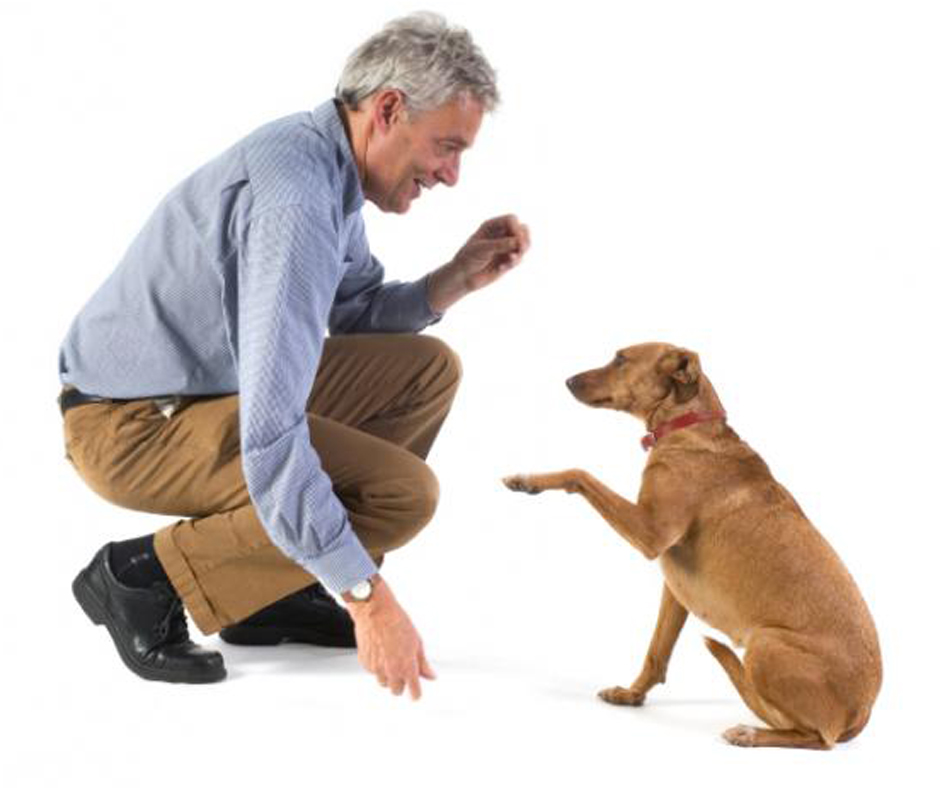

Even if you train your dogs using treats, your dog is really working for praise. As long as you don't show your dog the treat beforehand, they'll simply see it as part of the praise you're bestowing upon them. It will help you to foster a good relationship.

With that said, you shouldn't feel as though you have to use treats if you don't want to. A lot of people have been able to successfully train dogs without using any kind of treats at all. The choice is really up to you.


Think about how you want to train your dogs and decide whether or not treats are something that you want to use. You can have a well-trained dog whether or not you use treats, so it really comes down to your personal preference and the personality of your individual dog.

At the end of the day, the things that are most important are consistency and hard work. If you put in the effort to properly train your dog, you'll have a well-trained pet, no matter what kind of methods you use. Look at all the information out there and make the choice that's right for you.


Source:http://ezinearticles.com/?Should-You-Train-Your-Dog-Using-Treats?&id=9116120

Thursday, 17 May 2018

Tips On Introducing The Newborn Baby To Your Dog


Bringing your newborn baby home from the hospital, while being an exciting time for the new parents, can be a very stressful time for your dog. Dogs are extra sensitive and can feel the tension that the parents have when they first bring the baby home, this can cause anxiety for the dog as well. If you have a well-trained dog, that is attentive to all your voice commands, then you'll have fewer problems than if you've never formally taught him discipline. Whatever the case may be, there are some things you can do to help get your dog, and the newborn baby, accustomed to each other, so they eventually form a long-term, happy relationship.


When introducing baby, one of the first things you'll want to do, is get your dog acclimated to all the new smells that are going to be permeating the household for the next few years. The new baby is going to have a variety of odors that are different from anything that has ever lived in the home before, and the dog will need to learn all these new smells, sounds, and everything else that's involved with the baby. So, before you even bring the new baby into the home, the mother should come in with some articles of baby's clothing to have the dog smell them and attach that smell to mom as well. Once the dog has relaxed, only then should dad bring the new baby inside, then both mom and dad should talk in soft calming tones while petting the dog during the introduction.


Now that the original introduction is done, it's time to let the dog check out all the different parts of the baby, under strict supervision of course, continuing with the calming voices and reassuring pets and hugs. Your dog will intuitively absorb the emotions from you and learn that that's the way it should act around the baby too. Have the dog sniff the baby's hands, feet, diaper, and any other part that he's interested in, except for the face to begin with. After the first baby inspection, praise the top profusely and give him a couple of his favorite treats to let them know that he's still part of the family.


After everything has calmed down in the house, and your dog has laid down to relax in his normal spot, it's time to invite him over to lay down next to the baby. You or your spouse should remain close, constantly reassuring the dog with praise, combined with whatever command you normally use when you want your dog to be gentle. It's important that you spend several sessions in the first couple of days getting your dog to be comfortable around the baby, and non-aggressive. It doesn't hurt to give your dog a treat for being good when you're paying special attention to your baby, such as feeding time, play time, or changing a diaper, that way your dog won't feel like he's in competition with the baby, but instead will welcome feeding time.

Introducing a new baby to your dog can be a stressful task, but if handled correctly in a calm manner, there should be very few problems. Dogs naturally tend to like children, and end up being their best friend after just a short period of time, so it's important to remain relaxed and share attention anytime you can.


Source:http://ezinearticles.com/?Tips-On-Introducing-The-Newborn-Baby-To-Your-Dog&id=8808340

Tuesday, 1 May 2018

8 Pet Care Tips for Dog Owners


Being a dog owner is a real joy. It promises years of pleasure and companionship to owner and dog alike. But it is also a heavy responsibility and a long-term commitment. Below are eight tips on how to care for that "friend" to which you have made such a commitment.

1. Keep Up-to-date on Rabies and Other Vaccinations

This is vital to your dog's well-being. Rabies is still a threat to our pets. Every summer brings reports of findings of rabid bats or other wild animals. Rabies is especially prevalent if you live on acreage or in a wooded area more populated by wild animals.

Owners do have the option of getting a one year or a two year rabies shot -- or, if they are concerned about the side effects of a rabies shot another option is to get their dog a titer test, a blood test that indicates whether the animal's previous vaccine is still active or sufficiently protecting him. This prevents the owner from having to get a vaccine before it is absolutely necessary. Heart worm too is a very real threat to your dog and can be avoided by a heart worm pill taken monthly.

2. Regular Vet Check-Ups


This can be combined with your dog's vaccination appointment. A check-up will help the vet identify any problems while they are still in the early stages, whether it be a tumor or fleas.

3. Healthy Diet

This is not to be taken lightly as we hear so often about dog foods that contain melamine or are somehow contaminated. Many dog foods are not nutritionally balanced and fillers such as ground corn and other grains are added simply for volume. The primary ingredient in your dog's food should be meat.

4. Proper Training


A well-trained dog is a happy dog. He knows what is expected of him. He doesn't annoy guests with a display of bad manners or repel them by jumping on them or slobbering on them. Good obedience training also keeps him safe.

5. Socialization

It is important that your dog learn to play well with other dogs, not being the aggressor or snarling at his canine companions. The more quality time he spends with dogs, the better behaved he can be counted on being. So, go to the dog park, go to dog events, walk him in your neighborhood and let him visit with his neighbors. It will make him a confident

6. Grooming

Grooming is important to you dog's health. If he is matted or his nails need cutting, he is uncomfortable. He will be constantly chewing on himself and panting out of agitation. Also, a good groomer who grooms your dog on a regular basis is going to detect abnormalities or signs of distress or disease. If caught early such discoveries do not have to equate to a death sentence.

7. Exercise Your Dog


If he gets enough exercise he won't be an unholy, hyperactive terror. He will sleep well when it's bedtime and not be agitated and excitable. Exercise is also good for his overall health.

8. Obey the Leash Laws


They are for your dog's protection. His training will enable him to walk with you and obey your commands.

These are just a few of many tips to help you ensure that you have a happy, healthy dog and one with impeccable manners! Follow them and you will be exemplary as a dog owner.


Source:http://ezinearticles.com/?8-Pet-Care-Tips-for-Dog-Owners&id=8747543

Monday, 26 March 2018

The 3 Steps Of Good Dog Training


Dog training consists of three basic steps. If done properly and in the correct sequence, you will have a happy, well-trained dog. The three steps are: teaching your dog, correcting him, and proofing his training so that he is able to perform in any environment. 

Step 1: The Teaching Phase. During this first phase, you are teaching the dog what a command means and what he is supposed to do. This step can be used whether you are teaching your dog to Sit or something much more advanced. You have to teach the dog before you can move on to do anything else. It's important to make teaching as much fun for your dog as possible during this step and the steps that follow. Dogs learn best when you keep things fun. If your dog thinks training is like a game, he will have a good attitude and enjoy learning. 


Step 2: The Correction Phase. During this phase you know that the dog knows the exercise but he refuses to do it. When this happens you give a verbal and/or small leash correction. The dog learns to do what you ask every time. Although you are correcting your dog, you should still keep this phase fun. Maintain a positive attitude toward your dog. Do not train your dog when you're angry or upset. 

Step 3: The Proofing Phase. When your dog is doing everything well you start increasing the distractions present so that he learns to perform in any environment. This means that you can add sounds, things moving, additional people in the room, and even take him to new places to practice the exercises. Proofing helps to make your dog perfect at performing the exercises and he learns to ignore the distractions. Take your time. It is more important to get things right than to rush your dog's training. It can take a long time to proof some commands so that your dog performs them reliably. During this phase you will most likely be working without the leash so plan to work in enclosed areas at first until you are sure that your dog can be trusted in open areas. 

By taking the required time to work on each step you will have a dog that not only works well in your living room without any distractions, but also outside around other people and distractions. The secret is to take the time to accomplish each step properly and make it fun.


Source:http://ezinearticles.com/?The-3-Steps-Of-Good-Dog-Training&id=8591061


Monday, 19 February 2018

2 Commands That Could Save Your Dog's Life


For some people having a well-trained dog is a must. For other people having a well-trained dog would just be nice. No matter which way you look at it however there are two commands that are absolutely essential for any dog. These are commands that could save your dog's life. 

The Down Command 


Yes the down command is one of those life-saving exercises that should be taught to every dog from a young age. In fact the down command is the exercise that develops that master dog relationship. I always tell my clients that when your dog is 20 feet away, you say down and it immediately drops to the ground without you doing anything else will be the day that your dog says you are the master. 

Another added bonus is the fact that a lot of things have been written about aggression and one thing that many of them talk about is that if your dog had been taught the down command at an early age you probably would not have seen the aggression. 

As I mentioned the down command can also be a life-saving exercise. For example your dog sees that squirrel and starts running after it toward the street and here comes a car. You yell down and the dog drops to the ground before it ever reaches the street. The command just saved your dogs life, I've actually seen this happen on multiple occasions. 

The Come Command 


As you can imagine the come command or the recall is another exercises that can save your dog's life. This is another exercise that should be taught to your dog at an early age before it realizes it doesn't have to come when you call. I tell my clients to keep their dogs on a leash until their dog learns how to come so it never learns it doesn't have to. 

In teaching this exercise you want to do something spectacular every time your dog comes when called. That can be by giving it a ton of praise, a toy, and even a treat. What we are trying to do in the beginning is to develop a habit in the dog so that when he hears the command come he does it each and every time without even thinking about it. 

And here's one important thing to remember you never want to punish your dog when it finally does come to you. For example, it got out the front door and is running around the neighborhood, you are frustrated, you are angry and finally the dog does come to you. You have to give it praise. Punishing the dog at this point will only teach it not to come to you again. 

At this point you may be saying to yourself why is it important to teach both commands when one should do the trick. I have found over the years that most dogs respond better to either the come command or the down command. By teaching your dog both commands you'll have two tools that can accomplish the same job and maybe save your dogs life one day.


Source:http://ezinearticles.com/?2-Commands-That-Could-Save-Your-Dogs-Life&id=8368167


Thursday, 8 February 2018

6 Training Secrets Every Dog Owner Should Know


Now that you have a dog it's time to do some training. I'm going to share some training secrets that will make training Fido much easier and at the same time more enjoyable.

1. Exercise the Dog If He Is High Drive


If you have a dog that is bouncing off the wall with excitement then you need to wear it out a bit before you start your training. A good way to do that is to take your dog for a nice 15 or 20 minute walk. If it's easier take him out in the backyard and throw the ball for 15 minutes or so until he wears down a little bit. Hopefully after getting rid of some of his energy he will be much easier to work with for your training session.

2. Crate the Dog If He Is Laid Back

On the other hand if you have the dog that is laid back without much energy try crating him for about an hour. Then when it's time to train hopefully he will be more excited to come out and do something.

3. Always Do Something Special for the Dog After the Training Session

I tell people after you do your training session do something special for the dog. In other words if he enjoys going for a walk take him for a walk, if he enjoys chasing a ball, throw it and if he enjoys having his belly rubbed do it. It just gives the dog something to look forward to after each training session.

4. Keep the Session Serious But Fun

When I say keep the session serious I mean, you can't be doing a lot of laughing and giggling because then the dog thinks we are playing. So keep it serious and act as if you are an elementary school teacher who wants to teach her children well. I think the attitude to have when training a dog is to think of yourself as being firm but fair, not mean.

5. Only Give a Command Once

This is an important one. You should get in the habit of only giving a command one time. If you don't your dog starts to learn that you'll tell him four or five times before you get upset. We want the dog to learn that he only gets one command and he has to do it when he hears it the first time. That is the sign of a well-trained dog.

6. Don't Use the Dogs Name Just the Command

Using your dog's name with the command just sort of gets in the way. He really doesn't need you saying Fido sit, Fido down, Fido heel because he knows exactly who you're talking to. Using his name before each command is just sort of redundant and boring.

I think if you'll follow these six simple secrets of dog training you will find that it's a lot easier to train your dog and you'll have a lot of fun in the process.


Source:http://ezinearticles.com/?6-Training-Secrets-Every-Dog-Owner-Should-Know&id=8331776