Showing posts with label veterinarian. Show all posts

Thursday, 7 March 2019

Free Dogs


Are you looking for a new friend to snuggle with? Adopt your new friend today for free! Dogs are the most loyal animal in the world. By adopting a dog for free, you will be giving your new pet a new and safe forever home. Why pay hundreds of dollars for your new best friend when you can get it for free?!

The top 10 most popular dog breeds include the Labrador Retriever, German Shepherd, Golden Retriever, French Bull Dog, Poodle, Yorkshire Terrier, Beagle, Boxer, and Rottweiler.

If you are looking for a small dog, the Yorkshire Terrier is amongst the smallest dogs, but Chihuahuas, Pugs, Shih Tzu, Pomeranians, Poodles, and Beagles are, also, small. If you are looking for a big dog, the English Mastiff is the largest dog, but Siberian Huskies, Saint Bernards, Rottweilers, Golden Retrievers, German Shepherds, and Labrador Retrievers are, also, big. There are
different variations to all dog breeds, for instance, there are teacup dogs that are smaller than the average size of that particular breed.

It is important that you train your new friend to use the bathroom outside or on a puppy pad. Or else you will have a stinky house or apartment. You will need patience while training your dog, but some breeds are easier to train than others. Larger dogs tend to have more energy than smaller ones. Generally, the energy level increases as the size of the dog increases. You can get energy out of your dog by playing fetch, going for a walk, and getting toys for your dog. Smaller dogs often get cold easily, so if you want a small one, get a sweater for it during the Winter. Dogs with long coats need to be brushed about once a week to ensure their coats do not get damaged or mat. If you think you cannot have a dog because you have allergies, you are wrong. Hypoallergenic dog breeds include the Poodle, Maltese, Schnauzer, and Shih Tzu.

These breeds do not shed as much or at all, so they are safe for people with allergies. You, also, need to take your pet to the veterinarian to get checks up every now and then to catch medical conditions early. If you want your dog to go outdoors, make sure you get it spayed or neutered so your dog does not come home pregnant or get an abandoned dog pregnant. They are very intelligent. They can easily tell if a human is upset and usually will snuggle up to the human to make sure he or she is okay. Even if you are not upset, your new friend might try to sit on your lap or cuddle with you in bed. It depends on the breed of dog and the individual personality of them.


Each breed has its own traits, so before getting your free pet do your research to make sure your home and lifestyle can handle that type of breed! If you can open up your heart and home, you can have a free dog.


Source:https://ezinearticles.com/?Free-Dogs&id=9079493

Friday, 16 November 2018

Top 4 Ways to Keep Your Dog Healthy


A pet dog is one of the most loving and unselfish companions that you may ever find in your life. Your pet gives countless amounts of joy and in exchange, the least you can do is to keep it healthy. All that you need to do is to pay attention to 5 simple things to keep your pet healthy and happy.

Diet

One of the easiest ways to ensure that your dog stays healthy is to pay attention to their diet. A diet that is well balanced and nutritious can ensure the good health of your pet. One of the important things that you need to remember is that human food is not ideal for dogs. It is, in fact, bad for their health.

Depending on your dog's breed and age you need to choose the diet carefully. Choose a vegetarian or non-vegetarian diet after consulting a vet. Apart from a good diet give them plenty of clean water to drink. What your pet eats can go a long way in ensuring ideal weight, good dental health, and eyesight.

Exercise

Apart from a nutritious diet, regular exercise is also necessary to keep your dog healthy and fit. The simplest and best way to exercise is daily walking sessions (morning and evening).


Play with your dog so that they exercise various muscles of their body. Dogs need to run and play around to stay healthy. There are various types of exercise equipment that are specifically designed for pet dogs and you can make use of them to enable that your dog gets adequate exercise and stays healthy and happy.

Vet Visits

Regular veterinarian visits are important if you want to ensure that your dog stays healthy. Any kind of pain, discomfort or illness may stop your pet from leading an active life. If the illness is not detected and treated at the earliest, it can lead to other complications.

A regular visit to the vet ensures that any kind of health problem is detected and treated before it becomes life-threatening. Depending on the age of your pet you can choose to visit the vet at least twice a year.

Clean & Safe Dog Home

A good dog home can help protect your pet against cold weather, rain, and heat. When they have a good and spacious home they can stay protected at all times and this prevents them from falling sick.

These simple and effective tips can ensure that your dog stays healthy and happy at all times.


Source:http://ezinearticles.com/?Top-4-Ways-to-Keep-Your-Dog-Healthy&id=9591852

Tuesday, 30 October 2018

5 Effective Ways To Prevent Dog Diabetes


Did you know that there is a whopping 80 percent increase in dog diabetes since the year 2006? Unfortunately, this health problem is very common in canines. According to a veterinarian in Florida's BluePearl Veterinary Partners, Dr. Anthony Ishak, diabetes is not always prevented in canines. If your fur baby does develop the disease later on, there are many ways how you can help him manage the health problem properly and make it easier for him.

Here are 5 effective ways to prevent diabetes in dogs:

Don't miss your routine check ups

Routine check ups are very important to ensure that your pet is in a healthy state, so don't miss them. If your dog is recommended for a blood test, a vaccination or even just a follow-up visit to the vet then you must show up. Also, don't hesitate to ask advice from your veterinarian if you notice any changes in your dog's appetite, behavior, thirst, urine or poop habits to make sure they're not symptoms of a major health problem. According to Dr. Ishak, many diseases like pancreatitis and Cushing's disease increases a canine's chance of developing diabetes.

Keep your pet physically active


Experts say that regular exercise helps lower the chance of diabetes in both humans and dogs. Exercise helps your pet maintain a healthy weight and regulate his blood sugar levels which greatly contributes to both prevention and management of the disease. A daily walk and some free time to run and play out in the yard or at the park should do it.

Get your female pet spayed

Hormone fluctuations play a role in the risk of the disease. Get female dogs spayed - this does not only help prevent the condition but also lowers the chance of her developing other health problems.

Consider dog food quality

Dogs who eat a high protein diet are less likely to develop the disease compared to those who mostly consume simple carbohydrates in their dog food. A diet rich in protein helps stabilize your pet's blood sugar levels therefore lowers the chance of developing diabetes. When buying dog food, consider the quality of the ingredients used.

Feed your dog more fruits and vegetables


This is a no-brainer - eating a balanced diet with plenty of fresh fruits and vegetables is the best way to prevent or manage most health problems, including diabetes. Consider making homemade dog food and treats to make sure your pet is eating healthy.


To prevent or manage dog diabetes, simply follow these tips!


Source:http://ezinearticles.com/?5-Effective-Ways-To-Prevent-Dog-Diabetes&id=9812781

Monday, 29 October 2018

Vestibular Disease in Dogs: Causes, Symptoms, Diagnosis and Treatment


Vestibular system aids in providing equilibrium and a sense of spatial orientation to dogs. But a dysfunction can have serious effects on the balance systems of the dog's body. This system includes the parts of the inner ear and brain, which are responsible for the balance and eye movements. If the network is damaged by illness, aging, or injury, serious disorders can result, and are often associated with one or more of these signs, among others: Vertigo and dizziness.

There are two types of this disorder in dogs:

· Central Vestibular Disorder

· Peripheral Vestibular Disorder

The first one is less common but more serious form of this disease that originates inside the central nervous system.

The second type of this disease happens when there is an annoyance to the nerves connecting the inner ear with the brain. This results in failure of balance and other symptoms resulting in vertigo and dizziness. This illness can look to be quite melodramatic to the dog owner if this is the first time the dog has been affected. But most of the times the dog recovers with supportive care and treatment.


Causes

· Chronic and perennial inner and middle ear infections

· Overzealous cleansing of the ears leading to perforated eardrum

· Trauma from head injury

· Stroke

· Tumors

· Polyps

· Hypothyroidism

· Meningoencephalitis

Signs And Symptoms

· Head tilting

· Loss of co-ordination

· Circling and stumbling

· Staggering

· Falling and rolling

Congenital Vestibular disease is seen between birth and three months of age. Certain dogs are more predisposed to this condition, including Doberman Pinschers, English Cocker Spaniel, Beagle, German Shepherd, Tibetan Terrier and Smooth Fox Terrier.


This disorder is often mistaken as a stroke. Vertigo originated by this disease has an adverse effect on older dogs having symptoms like difficulty to stand up, circling, nystagmus, nausea, and head tilt. Older dogs are more stressed out due to this disease and so there is a need reduce their stress through earthy calming agents like amino acid, L-theanine and herbs including hops, Valerian, chamomile, and passionflower. Other remedies, including GABA, flower essences, tryptophan, and Homeopathics are also good in calming overwhelmed dogs.

Diagnosis

The veterinarian would conduct a physical examination to determine whether the disorder is peripheral or central. In case, a peripheral form of the condition is found, the veterinarian would use an otoscope to look deep into the ears of the pet. There are times when X-rays would be required. The veterinarian would also take the aid of blood tests, culture, sensitivity and cytology to get rid of other likely causes of specific symptoms. For tumors and polyps your veterinarian would propose a surgical biopsy. In case the central Vestibular disease is determined, the veterinarian would use an MRI or CT scan along with spinal fluid taps to find the root cause. If it is due to infection, then it has to be resolved.

Treatment

It is possible to alleviate nausea and vomiting with motion sickness treatments, but there is no specific treatment to manage Congenital Vestibular Disease. For middle or inner ear infection, antibiotics might be required to improve the condition. In case an under-active thyroid is the reason, the disorder will get resolved when the metabolic condition is managed precisely. If the treatment is the root cause then discontinuing the treatment can bring about complete resolution. But there are times when there can be some residual hearing failure. To completely cure this situation, the veterinarian would remove the polyps, but if there are cancerous tumors, then the conclusion is generally less positive.

This disease has a poor prognosis than peripheral form as a result of potential dangers to the brain stem that can be quite devastating. If there is an infection found, it has to be treated. In case of an inflammatory condition, it may react to treatment at first, but it can advance to a point where it could be untreatable. But the most common form of Vestibular disease - the peripheral form - improves swiftly, once the inherent cause is addressed and symptoms of vertigo are managed with supportive care.


Source:http://ezinearticles.com/?Vestibular-Disease-in-Dogs:-Causes,-Symptoms,-Diagnosis-and-Treatment&id=9821010

Friday, 12 October 2018

Helping a Dog With Arthritis Live Comfortably


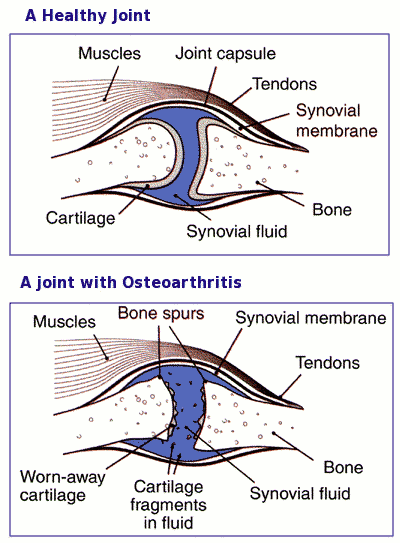
Arthritis in dogs typically becomes a problem as they age or after an injury of some sort. The painful condition can make your pet's daily life miserable. There are a few things that owners can do to help a dog with arthritis live a bit more comfortably.


If your dog's symptoms are due to obesity, then providing a proper diet will go a long way towards dog arthritis pain relief. The joints have to bear extra strain if your dog is overweight, which will only help make the condition even more painful. Make sure that your dog doesn't overeat, and ensure that the food is high-quality.


It's also important to ensure that your dog with arthritis gets a proper amount of exercise. Those with a milder condition will obviously be able to get more than those with a more severe case. If the condition is too painful, then consider letting your dog go swimming or some other non-weight bearing exercise.

Orthopedic Dog Bed

Comfortable bedding will also help in the effort for dog arthritis pain relief. The bedding should provide plenty of padding to give your canine some great rest at night You could even consider providing him with a heated bed. Make sure that his resting spot is away from drafty locations.


Dogs with arthritis don't especially appreciate having to navigate slippery surfaces. Ideally, you'll have non-skip flooring wherever your dog tends to travel. If you can, you could also consider putting a ramp on the steps outside your home since it'll make it easier for your dog to get inside.


Owners can also use massage techniques to provide dog arthritis pain relief. This helps reduce joint and muscle stiffness. Massaging your dog will also help increase blood circulation. You can ask your veterinarian to show you a few techniques to use on your dog.

Liquid Glucosamine for Dogs Vegetarian 
Suitable for Dogs Allergic to Shellfish or Beef

Supplements have also been beneficial in some cases, which is something you may also want to discuss with the vet. These supplements are aimed at increasing the health of the cartilage and joints. Two of the most common types include glucosamine and chondroitin.
Liquid Glucosamine for Small Dogs
Just like with people, increased age commonly brings about conditions such as arthritis in dogs. You can provide your dog with a better quality of life in various ways. If the pain is exacerbated by weight, then a proper diet and exercise will definitely help. Make sure that you talk to your veterinarian about all of your other options too.


Source:https://ezinearticles.com/?Helping-a-Dog-With-Arthritis-Live-Comfortably&id=9808365

Wednesday, 3 October 2018

5 Nutritional Tips to Keep Your Dog Healthy and Fit


It can be very overwhelming when it comes to selecting the dog food. With so many different forms of dog food available in the market, it becomes overwhelming to make a selection decision based on whether to feed a grain-free food, canned food or raw food. Also, remember that every dog is different. The healthiest diet for one dog might not be best for another. While selecting the dog food it is important to consider various factors, including the dog's age, weight, activity level, and breed. While there are other dogs that are suffering from allergies or sensitive stomachs. So, how would you determine whether your doggy is eating proper food?

To help you make an informed decision, we have enumerated certain nutritional tips to keep your dog healthy and fit:

Inquire from your veterinarian about nutrition


If you want to gain some clarity about your dog's nutrition, the very best person to answer your queries is your veterinarian. But the problem is most of the veterinarians in our country recommend a standard dry food like Science Diet. This diet is fine, but remember, Science Diet is a corn-based food that also comprises of animal by-products. Hence, try to discuss some meat-based alternatives for your furry pal. You can even ask questions pertaining to the dog food brands that you have zeroed in and ask specific questions pertaining to them.

Give multi-vitamins to the dog

Liquid Dog Vitamins

Ensure that you consider serving multi-vitamins to your doggy. Hopefully, your tyke might be getting requisite vitamins from the food he is eating. But just like taking a daily vitamin does not hurt us, the same way extra vitamins can be beneficial for your fur baby.

Switch to a natural dry food


Since you would be considering adding natural dry food to the diet of the doggy it will cost more than a standard dry food. The reason for that is it does not contain any animal by-products, chemical preservatives or corn. But if you can meet the budget, it is one of the easiest ways to enhance your dog's nutrition. If you think the cost is a problem, try mixing a natural brand with a standard brand.

Feed canned or raw food on a weekly basis

It has been researched and found that canned food is more expensive than dry dog food. But it can add variety to your fur baby's diet. There are a wide array of natural and organic brands of canned food available. You can even consider feeding commercial raw dog food. Raw food comprises of organs, veggies, bones, and raw meat all ground up in a patty format. Not every dog owner is comfortable serving raw food to their pet, but it is an option.

Supplement with digestive enzymes

Liquid Dog Vitamins
Containing Digestive Enzymes and Probiotics

Digestive enzymes and Probiotics can aid in supporting a healthy digestive system of the furry pal. These enzymes can be found in fruits, veggies and raw meat. But these enzymes get lost during the heating process while cooking the food. The dog owners who are not in favor of serving raw food to their pet can consider supplementing the diet with digestive enzymes. With the presence of Probiotics and enzymes, your dog can properly absorb nutrients.


Source:http://ezinearticles.com/?5-Nutritional-Tips-to-Keep-Your-Dog-Healthy-and-Fit&id=9689958

Sunday, 30 September 2018

Why Your Dog Needs Toys


So you're getting ready to bring home a new puppy or dog and you want to make sure you have everything your new pal will need. You have picked out the perfect collar and chosen the right kind of leash. You have a crate and a bed for the pup, and his own special bowls. The only other thing your pooch will need is toys. How do you know what to buy? What is best for puppies? Should you get hard chew toys or soft, squeaky toys? If you've been in the local pet store, you'll know there are tons of things to choose from. This may not seem like a very important decision, but in fact, having toys for your puppy or dog is crucial to his health and development. 


Toys and chews provide a puppy or dog the ability to enjoy something that is natural for them. Make sure your pup knows which things are his to chew on, or he will go look for something on his own. Toys and bones provide an outlet for a dog to release pent up energy or relieve boredom. Chewing is good for their teeth and jaws, as well as being a good stress reliever.
Teething Toy

The types of toys you will need to buy will depend on several things. Puppies are teething and as their permanent teeth come in, they will lose the puppy teeth. Toys for a small or medium breed puppy or a small breed dog need to be small enough for the dog to carry around and small enough for them to get their mouth on it. A large breed puppy can be bigger than a small breed full grown. There are toys and chew designed specifically for puppies or small breeds and toys for large breed, powerful chewers.

Another thing to consider is what type of toys will your dog need. Should you buy bones, or balls or rawhide or squeaky toys? Once you decide what is the best size for your puppy or dog, consider
how he or she will play with the toys. You should provide a variety of toys. A ball or a tug toy is great for playing with your dog. An appropriate size bone is good for your dog to keep himself occupied. Most dog experts recommend some type of puzzle toy where the pup has to figure out and work the toy to get a treat stashed inside. Many puppies, and even older dogs like to have a soft, stuffed animal toy. It becomes a comforting toy and they will not chew it or tear it up. My 3 Dobermans and probably other large breeds, like to tear apart anything like that, so we have no stuffed toys in my house!


Always keep an eye on your pup and his toys. Be aware if they are broken or torn in pieces and throw them out as needed, to prevent him or her from swallowing something that could obstruct the esophogus or intestines. Rawhides and certain other chews can cause problems for some puppies and dogs so always ask your veterinarian for his advice and recommendation.


Source:https://ezinearticles.com/?Why-Your-Dog-Needs-Toys&id=3097937

Monday, 24 September 2018

Dog's Anal Gland - Its Significance - An Essential Knowledge


All dogs have anal glands. They are located on either side of the anus. Behind the anal gland is a sac that secretes a strong smelling substance. The dog uses it's anal glands to mark its territory every time it excretes.

The scent that the dog deposits conveys information about the sex of the dog and its health. This is important for other dogs since they are territorial animals. That is why dogs smell one another's anal glands and deposits of feces. They are checking for a male competitor or a female on heat.

When they function well a dog's anal glands are no problem. But they can become blocked and that can lead to problems. A responsible dog owner should now how to express their dog's anal glands to move the blockage and prevent problems.


You may notice your dog dragging its rear end across the grass. This means that they are itchy and can be a symptom of blocked anal glands.

If you do not know how to express the dog's anal glands then consult your veterinarian who will do it for you. It is a good idea to take the opportunity of learning to do this yourself because it will save future vet's bills and is comparatively easy.


What you need to do is to hold the dog's tail up pointing towards its head. Then take a paper towel and press the left side of the left gland with your thumb and your forefinger on the right side of the right gland. Squeeze firmly and gently. The glands should issue a brownish yellow substance.

If the glands have become seriously impacted the method described above may not work. You will then need to put on some surgical gloves. Lubricate them with KY jelly and remove the blockage manually.


You must insert your forefinger into the dog's rectum and squeeze each gland in turn. This may prove harder than simple expression and the substance that comes out will be darker in colour and foul smelling.

If your dog's anal glands become impacted they can get infected. You will notice bloody pus when you try to express them. In that case you need to treat the dog with antibiotics. It is better to keep the anal glands clear then you will avoid that scenario altogether.

Expressing your dog's anal glands may seem an unpleasant chore but it is important in maintaining your dog's general health. The itching that results from a blocked anal gland can be very uncomfortable for the dog. If the blockage gives rise to an infection that can have important health implications.

Infections can generally be treated easily with antibiotics but it is best to avoid antibiotics if possible. The overuse of antibiotics is leading to many resistant strains of bacteria. Antibiotics should be used only when necessary.

A simple expression of the anal glands will prevent complications and save you some heavy veterinary bills in the future. It is the work of a few minutes once you know how.


Source:http://ezinearticles.com/?Dogs-Anal-Gland---Its-Significance---An-Essential-Knowledge&id=1662206

Sunday, 23 September 2018

What You Should Know About Heart Worms in Dogs

 
As their name suggests heartworms live in the heart of a dog where they can do a lot of damage. It is important for a dog owner to be aware of the dangers of the parasitic heartworm. A responsible dog owner must be alert to the risk of a heartworm infestation and take preventive measures. If an infection is suspected you must seek treatment from your veterinarian.

Heartworms are also known by the Latin name of "Dirofilaria immitis." They normally live in the right ventricle of the heart where they float freely near the blood vessels. They are transmitted by mosquitoes that pass them from dog to dog in their saliva when they bite an animal. So even your dog does not come into contact with other dogs it is at risk. Cats are also prone to them.


An infestation of heartworms goes through four stages. The treatment prescribed by a veterinarian will depend on what stage the dog has reached.

In the first stage a dog that has been infected with heartworms by a mosquito bite will not show any signs of infection. The heartworms will not even show up in a blood test. This is why prevention is important. Speak to your veterinarian about heartworm prevention when your dog is still a puppy. A dog that is older than seven months can have an adverse reaction to treatment. So tackle the issue before it reaches that age.

The worms have to mature and make their way to the heart before they can be spotted by any tests. This is the second stage of the disease. By then the signs of a heartworm infestation can be detected by x-ray. The heartworms damage the blood vessels around the dog's heart and lungs and this can be picked up on an x-ray. The dog may also be short of breath and coughing.

The rate at which damage takes place depends on the number of worms. But it is rare for a dog to be infected by only one worm. A heavy infestation will rapidly cause a blockage of blood flow. This is the third stage. The dog may be showing signs of weight loss. Tests may reveal liver and kidney damage. This is the third stage of the disease.

As the blockage to the blood flow becomes more severe the dog may exhibit symptoms such as pain, shortness of breath, lethargy and hypertension. The dog may even faint. A heart attack is possible.

In the fourth and most serious stage the dog experiences what is known as Vena Cava Syndrome. The dog is in a state of shock and dying. The only possible intervention at this advanced stage is surgery to physically remove the worms. Success is by no means guaranteed.


Source:http://ezinearticles.com/?What-You-Should-Know-About-Heart-Worms-in-Dogs&id=1662196

Friday, 21 September 2018

Veterinary Care For Your Puppy


So, you finally gave in a got a puppy. Now you need to know what to do next. Puppies are at risk for many different diseases, but they can be prevented. One of the first things you need to do after bringing your puppy home, is make an appointment with a veterinarian for a check-up and vaccinations.


Your puppy will need a fecal exam to screen for parasites. Worms can make your pup very sick but they can easily be treated with medication. There is a series of vaccines to be given between 8 weeks and 16-20 weeks of age. The first shot your puppy will get protects against several different diseases. It is known as DHLPPCv. The vaccine covers the following:

D- Canine Distemper - A viral infection which can be fatal. Affects the respiratory, gastrointestinal and nervous systems.

H- Hepatitis - Affects the liver

L- Leptospirosis - Bacterial infection of the kidneys

P- Parainfluenza- upper respiratory infection

P- Parvovirus - Potentially fatal, affects the lining of the intestines. Many veterinarians recommend that certain breeds, such as Dobermans and Rottweilers, should have 2 parvo vaccines. The final vaccine should be given at 20 weeks of age.

Cv- Coronavirus - similar to parvovirus but not usually fatal.


After the puppy is a year old, this vaccine should be given yearly. There are several other vaccines your pup will need to stay healthy. The rabies vaccine is given to pups at 4 months of age and repeated the following year. After the second year, the rabies vaccine is given every 2 years. 


If you are going to board your puppy (or dog), the vet will give a Bordetella vaccine. This is given as a spray in the nose and protects the dog from kennel cough, which is exactly what it says...a cough, and is highly contagious. The Lyme vaccine is given to protect from a tick-borne illness. Lyme disease causes joint pain, fever, and swollen lymph nodes. It is given in a series of 2 doses, one at 8 weeks and one at 12 weeks.

Besides the vaccinations, your puppy, at 6 months of age will have a blood test for heartworm. If the test comes back clear, he will start on a monthly dose of heartworm prevention medication. Finally, between 6 and 12 months of age, veterinarians recommend your puppy be spayed or neutered.

Together, you and your vet can ensure a long and healthy life for your new puppy.


Source:https://ezinearticles.com/?Veterinary-Care-For-Your-Puppy&id=2162150

Thursday, 6 September 2018

Helping a Dog With Arthritis Live Comfortably

Arthritis in dogs typically becomes a problem as they age or after an injury of some sort. The painful condition can make your pet's daily life miserable. There are a few things that owners can do to help a dog with arthritis live a bit more comfortably.

If your dog's symptoms are due to obesity, then providing a proper diet will go a long way towards dog arthritis pain relief. The joints have to bear extra strain if your dog is overweight, which will only help make the condition even more painful. Make sure that your dog doesn't overeat, and ensure that the food is high-quality.


It's also important to ensure that your dog with arthritis gets a proper amount of exercise. Those with a milder condition will obviously be able to get more than those with a more severe case. If the condition is too painful, then consider letting your dog go swimming or some other non-weight bearing exercise.

Comfortable bedding will also help in the effort for dog arthritis pain relief. The bedding should provide plenty of padding to give your canine some great rest at night You could even consider providing him with a heated bed. Make sure that his resting spot is away from drafty locations.


Dogs with arthritis don't especially appreciate having to navigate slippery surfaces. Ideally, you'll have non-skip flooring wherever your dog tends to travel. If you can, you could also consider putting a ramp on the steps outside your home since it'll make it easier for your dog to get inside.


Owners can also use massage techniques to provide dog arthritis pain relief. This helps reduce joint and muscle stiffness. Massaging your dog will also help increase blood circulation. You can ask your veterinarian to show you a few techniques to use on your dog.

Liquid Vegetable Glucosamine
Suitable for ALL Dogs even those Allergic to Shellfish or Beef

Supplements have also been beneficial in some cases, which is something you may also want to discuss with the vet. These supplements are aimed at increasing the health of the cartilage and joints. Two of the most common types include glucosamine and chondroitin.

Just like with people, increased age commonly brings about conditions such as arthritis in dogs. You can provide your dog with a better quality of life in various ways. If the pain is exacerbated by weight, then a proper diet and exercise will definitely help. Make sure that you talk to your veterinarian about all of your other options too.


Source:https://ezinearticles.com/?Helping-a-Dog-With-Arthritis-Live-Comfortably&id=9808365