Showing posts with label Liquid Glucosamine for small dogs. Show all posts

Wednesday, 19 June 2019

How Does A Hip And Joint Supplement Work As A Pain Relief For Dog Arthritis?


The common diseases that affect dogs are related to their joints and connective tissues. One of these diseases is dog arthritis, which is characterized by inflammation of the joints. Reportedly, one in five adult dogs in the U.S. is affected by the disease. Arthritic dogs experience chronic pain, and this affects their quality of lives. Their mobility is decreased, leading to other health problems such as obesity and muscle atrophy. Thus, arthritic dogs should be given appropriate treatment and care. 
Liquid Glucosamine for Dogs

One of the ways of treating the disease and alleviating the pain it causes is through prescription drugs. However, regular and long-term use of these drugs may cause liver and kidney problems. This is where a hip and joint supplement for dogs proves to be important in providing pain relief for dog arthritis. Generally, the supplement contains glucosamine, which is a compound needed for the growth and repair of connective tissues. Glucosamine is naturally found in dogs' body, but as they age, their levels of the compound tend to decrease. This makes them vulnerable to the disease and other joint-related conditions. However, the glucosamine that the supplement contains can help lubricate the joints. It also has anti-inflammatory properties, preventing swelling in the joints and consequently the pain the swelling causes. 

Liquid Glucosamine for Small Dogs

The supplement also contains other compounds that help repair worn out and damaged connective tissues, and one of them is chondroitin sulfate. And, the thing about the compound is that it does not only repair damaged tissues. More importantly, it helps stop the development of joint diseases themselves. Moreover, glucosamine and chondroitin sulfate are often combined in a hip and joint supplement to boost each of their benefits. The supplement may also contain antioxidants such as Vitamin C and manganese. 

Besides the supplement, there are other ways of providing pain relief for dog arthritis. These include low-impact exercise such as leash walking and swimming. Proper diet is also very important to prevent the dogs from becoming overweight - the extra weight they carry can aggravate the pain they are experiencing.


Source: https://ezinearticles.com/?How-Does-A-Hip-And-Joint-Supplement-Work-As-A-Pain-Relief-For-Dog-Arthritis?&id=8295805

Friday, 12 October 2018

Helping a Dog With Arthritis Live Comfortably


Arthritis in dogs typically becomes a problem as they age or after an injury of some sort. The painful condition can make your pet's daily life miserable. There are a few things that owners can do to help a dog with arthritis live a bit more comfortably.


If your dog's symptoms are due to obesity, then providing a proper diet will go a long way towards dog arthritis pain relief. The joints have to bear extra strain if your dog is overweight, which will only help make the condition even more painful. Make sure that your dog doesn't overeat, and ensure that the food is high-quality.


It's also important to ensure that your dog with arthritis gets a proper amount of exercise. Those with a milder condition will obviously be able to get more than those with a more severe case. If the condition is too painful, then consider letting your dog go swimming or some other non-weight bearing exercise.

Orthopedic Dog Bed

Comfortable bedding will also help in the effort for dog arthritis pain relief. The bedding should provide plenty of padding to give your canine some great rest at night You could even consider providing him with a heated bed. Make sure that his resting spot is away from drafty locations.


Dogs with arthritis don't especially appreciate having to navigate slippery surfaces. Ideally, you'll have non-skip flooring wherever your dog tends to travel. If you can, you could also consider putting a ramp on the steps outside your home since it'll make it easier for your dog to get inside.


Owners can also use massage techniques to provide dog arthritis pain relief. This helps reduce joint and muscle stiffness. Massaging your dog will also help increase blood circulation. You can ask your veterinarian to show you a few techniques to use on your dog.

Liquid Glucosamine for Dogs Vegetarian 
Suitable for Dogs Allergic to Shellfish or Beef

Supplements have also been beneficial in some cases, which is something you may also want to discuss with the vet. These supplements are aimed at increasing the health of the cartilage and joints. Two of the most common types include glucosamine and chondroitin.
Liquid Glucosamine for Small Dogs
Just like with people, increased age commonly brings about conditions such as arthritis in dogs. You can provide your dog with a better quality of life in various ways. If the pain is exacerbated by weight, then a proper diet and exercise will definitely help. Make sure that you talk to your veterinarian about all of your other options too.


Source:https://ezinearticles.com/?Helping-a-Dog-With-Arthritis-Live-Comfortably&id=9808365

Thursday, 27 September 2018

Why Do You Use Glucosamine for Dogs?


If your pooch seems to be slowing down these days, there is a good chance that he is suffering from canine osteoarthritis, hip dysplasia, or both. Arthritis in dogs is a common ailment that affects up to 30% of dogs and cats. Some of the reasons why you may want to consider using glucosamine for dogs is to treat the following signs of arthritis:

- If your dog has begun to fall behind on your daily walks 
- If your dog is having problems or avoids playing, walking, jumping and going up stairs 
- If your dog seems lethargic 
- If your dog is limping 
- If your dog has problems getting up after laying down 
- If your dog seems to wince or show signs of pain when petted over certain areas

Animals have a much higher pain threshold than us humans do, which is why arthritis in dogs can go undetected for a long period of time. When a dog is starting to show signs of arthritis, chances are it is in a more advanced state that it would be if a human were to display these behaviors.
Liquid Glucosamine for Dogs
Suitable for dogs allergic to Beef or Shellfish

So why do people use glucosamine for dogs? Glucosamine for dogs means that your dog will have improved joint health. It's a natural and very healthy supplement that you can give your dog to soothe the joints and to reduce inflammation, which in turn reduces the amount of pain that your pet would otherwise feel on a daily basis.

Liquid Glucosamine for Small Dogs
Suitable for dogs allergic to Shellfish

Glucosamine is a substance that is already naturally found in the cartilage and the synovial fluid that is in your joints. That is why when dogs take glucosamine supplements, there are very rarely any sort of adverse side effects - it's a naturally occurring substance that is already in your dog's body!

Supplements of Glucosamine for dogs are not all created equal. To really optimize your dogs health, you will want to choose the very best product that you possibly can. In order to choose the best glucosamine for your dog, these are some things to consider:

- The type of glucosamine for dogs you will use (HCL, XKCL or sulfate) 
- How your pet will take the glucosamine supplement (pills or liquids) 
- The quality of the ingredients used (are they "superior" quality and produced in a GMP-certified facility) 
- The additional ingredients that are used 
- How much glucosamine they will need per day 
- The daily cost


Source:http://ezinearticles.com/?Why-Do-You-Use-Glucosamine-for-Dogs?&id=5501838

Saturday, 22 September 2018

Is Your Dog Suffering With Hip Dysplasia? - What Should You Do?


Hip dysplasia is a painful and debilitating condition in dogs that can sometimes result in the animal becoming completely crippled. There is no cure for it.

The best thing a dog owner can do is to choose a pet carefully. Hip Dysplasia is a genetic condition. That is to say it is passed on from the parents to the offspring. In some cases it can be the result of injury to a dog's hips while it is a puppy or while it is being born. But this is a comparatively rare cause.

While there may be some genetic component in most diseases hip dysplasia is in effect 100% genetic. You must therefore make sure that you examine the parents dogs when you buy a puppy. If they have sound hips the puppy is less likely to suffer from hip dysplasia. Question the vendors carefully about the pedigree of the puppy. Ask if there is any history of hip dysplasia in the family line.

Responsible breeders will have breeding dogs x-rayed to check for any sign of hip dysplasia. They should not breed from a dog that shows any signs of hip dysplasia. A dog may not exhibit any outward symptoms but have a tendency to hip dysplasia that only manifests itself in its offspring. A dog that shows signs of hip dysplasia should be neutered or spayed to make sure that it does not pass on the trait.

Some breeds of dog seem more prone to hip dysplasia then others. German Shepherds, in particular, often suffer from it. This may be because they have been bred for a stance that places the back hip at an unnatural angle.

Hip dysplasia may not show up in a puppy. It often only develops as the dog matures. This is because the back hips are misaligned and malformed. The joint is loose and that may lead to difficulty in walking and running or discomfort and pain.


Wear and tear on the joints gradually produces dislocation and damage. A hip joint that is damaged in this way can become arthritic. An owner may not know about the hip dysplasia and think that the dog has developed arthritis as it got older. But the root cause of the arthritis is the damage that the weak joint has suffered during the dog's lifetime. Large dogs are especially susceptible because of the weight that their joints must carry.

Liquid Glucosamine for Dogs Vegetarian 
Even suitable for Dogs Allergic to Shellfish or Beef
*Note: Glucosamine cannot cure Hip Dysplasia but it can make your dog's life more comfortable.

Your veterinarian cannot offer any treatment for the dyplasia but will be able to prescribe pain killers. In bad cases the dog will have pain when walking and running. Its mobility may become limited. This can be a contributory factor in other health conditions because the dog cannot take normal exercise. Swimming may be one means of maintaining mobility and ensuring that the dog can exercise. The dog's weight is taken by the water and it experiences less pain.
Liquid Glucosamine for Small Dogs
*Note: Glucosamine cannot cure Hip Dysplasia but it can make your dog's life more comfortable.
In extreme cases the dog's hindquarters may become completely immobile. The dog will have a very poor quality of life and chronic pain.


Source:http://ezinearticles.com/?Is-Your-Dog-Suffering-With-Hip-Dysplasia?---What-Should-You-Do?&id=1662198

Wednesday, 13 December 2017

Dogs and Arthritis

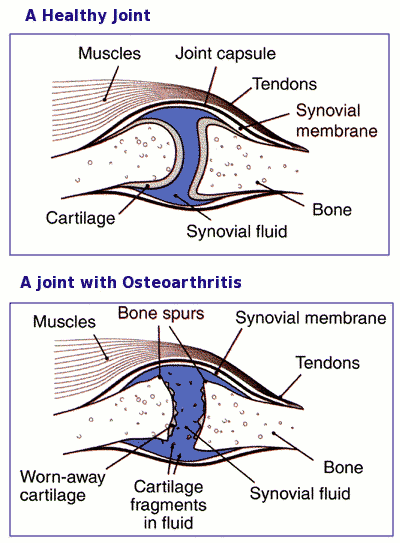
Arthritis, or osteoarthritis, or degenerative joint disease, is a condition in which the smooth cartilage that covers and protects the ends of your dog's bones begins to wear away. When this happens it leaves the bones exposed and, on the ends of joints where the bones meet, they begin to rub against each other. This makes the condition very painful and causes inflammation. The condition often worsens as your dog gets older.

Arthritis can occur as a result of normal wear and tear on a joint and progresses as your dog ages. This is known as primary degenerative joint disease. It's not unusual for many older dogs to have some small amount of arthritis as they reach their senior years. They may move stiffly when they first get up. They may feel the cold a little more. They may have a little trouble getting up and down from their naps. Your dog will probably find it harder to use stairs.

Arthritis can also occur as the result of other conditions that affect your dog's joints such as hip dysplasia and elbow dysplasia. These conditions can show up even when your dog is quite young. This is called secondary degenerative joint disease. These problems can be the result of heredity, conformation, trauma, repetitive actions such as too much exercise on hard road surfaces, and so on.

Any dog who is born with a predisposition toward a joint problem will be more likely to develop arthritis at some point in his life. This would include dogs with poor conformation (such as poor hip joints), and dogs who come from families with other dogs who have had a lot of arthritis or hip dysplasia. Any dog who has had an injury to a joint will also be more likely to develop arthritis.


Symptoms of arthritis will vary depending on the dog, the dog's age, the joints involved and the severity of the disease. The first thing most owners will notice is a change in the dog's gait. Dogs will usually try to avoid putting weight on the affected joint. There may be some muscle atrophy in the affected limb since the dog won't be using it as much. For example, if your dog has hip dysplasia in both hind legs, your dog's hind legs may begin to look thinner. He may begin to rely more on his front legs and shoulders to pull himself along so he can avoid using his rear legs as much.

Your dog may also show some changes in appetite if he is experiencing any pain. He may be touchy and irritable with other dogs in the household. In most cases the joints will not be swollen. Instead, the pain will be dull and aching so your dog won't cry out or let you know that he's hurting. Many dogs will seek out warm, soft places to sleep.


These changes may come about gradually so you may not notice them or you may attribute them to advancing age. However, if you call them to your vet's attention he or she will likely be able to confirm that your dog does have arthritis with a few tests.

In extreme cases arthritis can be treated surgically. This would include hip replacement. In most cases dogs are treated with medication for pain management.

Arthritis is usually a progressive disease but it can be mild or severe, depending on the dog. Your dog may only experience mild arthritis or he may have moderate or severe problems. Watch him and consult with your vet about treatment.

Liquid Glucosamine (Vegetarian)
Liquid Glucosamine for small dogs


Painful Arthritis can be eased in many cases by giving a glucosamine supplement to your dog.


Source:https://ezinearticles.com/?Dogs-and-Arthritis&id=8150991