Saturday, 10 March 2018

Give Your Dog A Job


Is your Border Collie being mischievous? Is your German Shepherd digging under the fence? Is your Labrador Retriever driving you crazy by bringing you the ball? These are all examples of a bored working dog that needs something to do. 

Quite often a new dog owner will buy a dog that's meant for working but their lifestyle is of the type that will not give the dog the exercise and work that it needs. 

So here are some things that you can do to give your working dog a job. 

1. Go for a daily walk - if 30 minutes doesn't seem to be enough shoot for an hour you'll be amazed at what it does for your dog and for your waistline as well. Even better yet if you are a jogger take your dog with you. Depending on its physical condition you may need to condition it for longer runs but it will be good for both of you. 

2. If you have a dog that enjoys Frisbee teach your dog to catch a Frisbee and spend some time every day playing with your dog. In fact if you both get into the Frisbee game there are actually clubs that you can join in most major cities that include training and competition. 

3. Obedience training is another way to give your dog a job. Yes obedience train your dog 2 - 3 times a day for a simple short no more than 15 minutes at a time session. You will be amazed at how a 15 minute obedience session can take some of the energy out of your dog.  

Brain and Exercise Game for Dogs


4. If you would like your dog to use it's brain there are now several different toys that will challenge your dogs mind while it tries to figure out how to get a treat. Take a look at your local pet store or simple Google "mind games for dogs". 


5. If your dog enjoys swimming you can always take him down to the river or your own pool if you happen to have one. Swimming is an excellent way to exercise humans and it works for dogs as well. 

The key to all of this is to get your dog up and busy. If your dog has a job or is exercised well you will have less problems with it at home. 

Remember what I have been saying forever, "a trained dog is a happy dog and an exhausted dog is even happier". So get out there and do something fun with your dog.


Source:http://ezinearticles.com/?Give-Your-Dog-A-Job&id=8489472

Which Type Of Crate Is Best For My Dog?

Two-Door Top-Load Pet Kennel


A crate is the greatest gift you can give your dog. Why, because dogs are den animals and the crate becomes your dog's den. So which type of crate should you select for your dog, the plastic crate or the wire crate? In my opinion there's no comparison the plastic crate is the all-out winner and I'll tell you why. 


If you were to crawl inside of the wire crate and look out where would you feel like you are, probably in jail? The wire crate just doesn't have that den like feeling that the plastic crate does. The plastic crate is darker and doesn't have all those bars. 

If you have a male dog a plastic crate is nicer because your dog can not hike his leg and pee out onto the floor. If your dog does have an accident because of the deep floor there's less chances of any of the mess leaving the crate. 

Petmate Sky Kennel


I understand that if you're traveling the wire crate might have the advantage because it collapses however it certainly isn't the safest crate for your dog to be in while traveling. In fact the airlines require that you use an approved plastic crate to fly your dog. You don't want to take a chance of traveling with your dog in a wire crate and having a situation arise where you have to slam on the brakes and your dog's leg goes between the bars and your dog gets hurt. 

So now that you have decided on which crate is best for you how big should it be. The dogs crate should be big enough for it to stand up and turn around and lay down. It should not be big enough for your dog to invite his friends over for a party. Actually what I'm trying to say is that if it's too big it loses that den effect where your dog feels that he's filling up the den. 

If you have a puppy then the crate is the ideal way to house train your dog. An added benefit of crate training is that your dog will get past the chewing stage and hopefully never chew up your furniture. 

Two-Door Top-Load Pet Kennel

When it comes to price I think you may find that the wire crates are slightly less expensive than a comparable plastic crate however in the long run I think you'll find that the plastic crate is the best choice for you and your dog.


Source:http://ezinearticles.com/?Which-Type-Of-Crate-Is-Best-For-My-Dog?&id=8489484

Friday, 9 March 2018

House Training: A Crate Idea


The frustration that leads frazzled pet owners to abandoning their dogs to shelters the most is a lack of effective house training. Remember that your dog is a family member, and as such, is worth the time and effort required to properly house break them, so that you can be a happier pet owner and your dog can be happily in their family's arms, not in a shelter. 

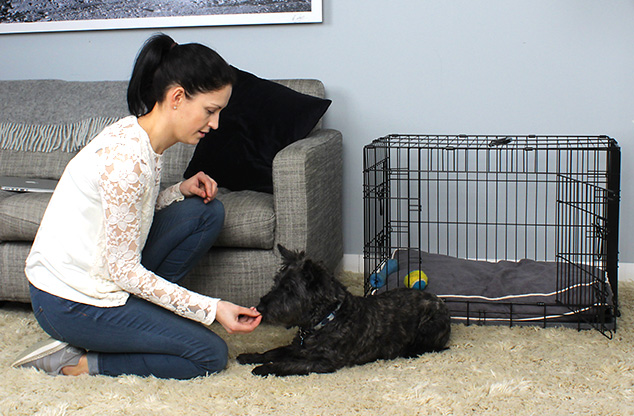
The house training method we'll be going over in this article is crate training. I consider crate training a great gift to your dog. As a den animal, your dog will learn to love his or her "den". Their crate will become a safe place, their sanctuary when they are stressed or just when they want some peace and quiet. 


Crate training is the house breaking method of choice for any good dog trainer and is widely considered the best way to train your animal to do their business outside. 

Crate training begins with an initial 4 week process. During this process, your dog should be in one of the following places at all times: 

1) in their crate 

2) on the grass 

3) in front of you 

It may sound harsh, but remember that this is only for the first four weeks of training. Dogs develop a preference for where they do their business; we want that to be the grass.
 

The first step to good crate training is to keep in mind what size crate is needed. Make sure the crate is just large enough for the dog. Dogs will not soil the area where they are going to sleep or stay, which is what makes crate training effective. But, if you purchase a crate too big, the dog will be able to do its business in one side of the crate and still be able to comfortably lay in the other end. We want to teach the dog that it can control itself while in the crate and can "hold it" until you are able to let him outside. Also, remember to not put anything absorbent in the crate, such as a towel or pillow - this may allow the dog to soil the object and still be comfortably out of its own mess. 

The first four weeks: 

So that it can't make messes in inappropriate places, whenever you aren't supervising your puppy, he or she should be in their crate. 

The first four weeks of training will require frequent trips outside for the pup: Immediately after you provide food or water for your puppy, take it outside to the grass. Also, immediately after it wakes from a nap or gets excited, take the dog out. 


Do not forget that you MUST pay attention to your puppy's every move when it is outside of the crate. A good tip to remember is to attach your puppy's leash to your belt so that it is always close by. 

Remember that consistency is the key - teach all family members these steps and to not allow your dog to do its business inside the house. Without consistent crate training, it may develop a preference for using the restroom on carpet or tile over grass.


Source:http://ezinearticles.com/?Housetraining:-A-Crate-Idea&id=8489547

When Should I Start Training My Dog?


One of the questions I'm asked most often is how old should my dog be before I start formal training. As far as I'm concerned that's an easy answer, 4 months (16 weeks). At four months old your puppy is like a blank canvas waiting to be painted with all the training you want for your new family member. At four months your dog hasn't developed a bunch of bad habits and he'll never be easier to physically manipulate because he's getting bigger everyday. 

Years ago we used to wait till the dog was 6 months to a year old but not today. Ten years ago training methods were different, not as motivational as they are today. If you choose a trainer who uses motivational methods 4 months is the time. 

So now that we've established the age what type of training should we do? It gets confusing here because there are several choices, including group classes, private in-home lessons and even the board and train programs that many trainers offer. Let's talk about each type of training. 

1. Group Classes 


A group class is an inexpensive way to get your dog trained and also has the advantage of socializing your dog around other dogs and people. However if your dog is easily distracted the group class may not be the best option. I have literally conducted group classes for thousands of people over the years and I can tell that it works for some dogs and not others. 

2. Private In-Home Lessons 


In-Home lessons are my favorite for training the new puppy for several reasons. First we are training in the home, and usually that's where we want the dog to behave the most. In-Home lessons allow us to see the dog with the family in its environment so that we can not only help train but also help solve behavior issues. Also in this type of training there are no distractions so the dog and the owner get the full benefit of the lesson without distractions. 

3. Board and Train Programs 


Board and Train programs are also sometimes called Doggy Boot Camp. This is where you leave your dog with a trainer from 2-4 weeks depending on the programs provided. The trainer trains your dog on a daily basis and SHOULD give you back a trained dog GUARANTEED. If they don't guarantee it don't leave your dog. The key to the success to this program is the follow up lessons for you. The trainer has to teach you how to handle the trained dog and you need to train on a daily basis to establish your relationship with the dog. 

So if I needed to make a decision on which type of training to do, the in-home private lessons are a no brainer as long as I will commit to training on a daily basis. If I have NO desire to train then the board and train program is the answer. Group classes come in last.


Source:http://ezinearticles.com/?When-Should-I-Start-Training-My-Dog?&id=8489556

Thursday, 8 March 2018

Separation Anxiety And Your Dog


Is your dog suffering from separation anxiety or could it simply be just some poor behavior from lack of proper training? Separation anxiety is a truly debilitating mental illness for dogs. In this article let's talk about some of the do's and don'ts when it comes to separation anxiety.

True separation anxiety is where your dog just can't be without you, sometimes not even for just a few minutes. Some of the signs for this illness can include:

· Trying to get out of its crate

· Soiling in the house or in the crate when you're gone

· Crying or barking endlessly for longer than 15 minutes

· Destroying things in the house such as furniture, carpet and woodwork

I actually had a client with a dog that had it so badly that somebody has to be at home with the dog 24/7. Yes you heard me correctly; these people have never been out to dinner or to the store together for almost 2 years. Somebody always has to be home.

Quite often dogs with separation anxiety cannot handle being crated. However there are other dogs with separation anxiety that find a crate to be a great place to relax. As you can see the symptoms can be different for different dogs.

A lot of people think their dogs are suffering from separation anxiety when in all actuality it is simply a poorly behaved dog. For example a nine-month old Labrador that's left unattended in the house without being crated can destroy a living room in no time. In this case it's the owners fault for not crating their dog.


So how do you help the dog that is suffering from separation anxiety? If you would ask your vet that same question he will probably suggest to you that you start off with some obedience training. Yes for some dogs obedience training will do the trick because it gives the dog a job to do. With other dogs obedience training doesn't help at all.

You also need to do some modifications to the way you do things at home by trying to desensitize the dog to you grabbing the car keys and walking out the door. Actually there are a whole list of things that a good dog behavior specialist or trainer will be able to advise you to do in an effort to help your dog.

After training and behavior modification have not solved the problem another visit to the vet may be able to help your dog by prescribing some medications that will help relieve your dog of some of its anxiety.

Separation anxiety it's hard to live with but hopefully one of these ideas will help you solve the problem.


Source:http://ezinearticles.com/?Separation-Anxiety-And-Your-Dog&id=8490315

5 Common Dog Behavior Problems


If you are a dog owner then at sometime or another you've experienced some type of behavior problems with your dogs. In this article we will talk about 5 of the most common dog behavior problems.

1. Okay let's start with jumping. You may have a dog that's jumping on you, on the kids, or maybe visitors that come to your home. No matter what, jumping can be very annoying and actually dangerous when it comes to small children or senior citizens.


2. Barking is another problem that you may have experienced. It seems that most people don't mind their dog barking to let them know that somebody is at the door or even somebody is outside that shouldn't be. However none of us want that nonstop barking that annoys the neighbors and keeps you from being able to enjoy the peace and quiet of home. Teaching your dog to stop barking on command is the answer.


3. House training is another huge issue for some people. If your dog has not been properly house trained then your dog is probably soiling in your home. Let's face it that just isn't acceptable. In fact the lack of house training is the number one reason dogs end up in shelters.

4. Chewing is one of those habits that we want to eliminate quickly. If you have a puppy that's chewing on things you'll have an adult that does the same thing unless you break that habit early.


5. Digging can be very annoying and dangerous for your dog. Dogs dig for different reasons sometimes just out of boredom, other times to find cool ground, and other times to escape under the fence. Digging holes in your backyard can be very unsightly but digging holes under the fence can be dangerous because your dog can escape and possibly get run over.

I'm sure you're asking now that we've identified some of the common behavior issues how do we solve them. The answer is actually very simple, training and behavior modification. It's amazing but behavior problems all seem to disappear if your dog is obedience trained.


Other problems will require some behavior modification. What is behavior modification? Simply changing the way you do some things at home with your dog so that it is able to learn better habits.

If your dog is suffering from these common behavior problems simply find a good trainer in your area that can guide you through the steps to eliminate the issues.


Source:http://ezinearticles.com/?5-Common-Dog-Behavior-Problems&id=8490327


Wednesday, 7 March 2018

5 Different Ways To Exercise Your Dog


Is your dog overweight? Are you overweight? Do you and your dog need some good exercise? Well here are five different ways that you can help your dog exercise and at the same time help you as well. Exercise is something that is required for man and beast so why not do it together. 


1. Are you a swimmer, what about your dog? Swimming is an excellent way for both of you to get exercise without any trauma to the joints. If you don't have your own swimming pool of course there's always the local river or lake where you can both enjoy a splash and get some exercise at the same time.
 

2. The most common way for people get exercise for themselves and their dog is by going for a walk. You can walk through the neighborhood with your dog however some people feel that's a little boring. If you're one of those people you might try going for a hike. Simply throw the dog in the car and go to a local park that may have some great hiking trails. Be sure and take plenty of water for you and your dog as well. 


3. Are you a jogger? In fact maybe you're preparing for the upcoming 5K. Well there simply isn't a better jogging partner than your dog. However remember you may have to condition him the same way you conditioned yourself to get to the 5K level. Once he's able to do that distance I think you'll have a happy dog and will see some great results from the jogging. 

Dog Bicycle Exerciser Leash

4. Biking is another exercise that could include your dog. You may want to consider one of the attachments that actually attaches to your bike and keep your dog in the proper position on your ride. Just like with the running or jogging be sure to condition your dog to prepare for this type of exercise. 


5. Last but not least if your dog enjoys chasing a ball, go out and throw that ball for your dog. In fact you can sit under the shade tree sipping on your Ice-T while your dog retrieves and gets plenty of exercise. Of course if you have a dog that enjoys the Frisbee you can do the same thing with the Frisbee as well. 


Keep in mind while exercising your dog to consider his overall physical condition don't try to do too much too fast which can cause problems. Also remember that a puppy should not be doing as much running, jumping, etc. as an adult dog because we don't want to do anything that could damage joints and bones.


Source:http://ezinearticles.com/?5-Different-Ways-To-Exercise-Your-Dog&id=8490336