Tuesday, 4 December 2018

How to Select the Best Size Dog Crate


You might have a concern about the use of a crate for your dog, whether the purchase is for the housebreaking process, discouraging chewing or aiding in travel with your pet. To address this concern we need to remember that by nature, the dog is a pack animal. S/he likes to run with companions showing they still have some qualities and characteristics of their ancestors. This ancestry characteristic includes the natural need of having a den. Do not be concerned that you are putting your pet in a "cage". The crate resembles the shelter of a small den. In the natural environment, it was a shallow hole, a narrow passage that was big enough to stand up, turn around, lie down comfortably, and be protected from predators. In present-day, your pet considers you and your family their running pack and the cage a private space which offers the shelter of a small den. So when considering the purchase of a dog crate, you need to consider all of the natural tendencies of your pet.


You will find many articles explaining how to measure your dog's height and length, dog crate size guides, and breed standard suggestions for crate size. To measure your dog's height and length, the points on your dog are the following: For the length of the crate, measure from the tip of the dog's nose to the base of the tail when the dog is in standing position, then add 2-4 inches. It is not recommended to measure to the end of the tail because it will make the crate too long. However, if your dog has a thick or hard tail, you do need to measure some of the tail. For the height of the crate, measure your dog from the floor to the tallest point of their nose/head while the dog is in sitting position. Again you need to add 2-4 inches to the height measurement. This will give you the shortest height of the crate. If your dog has erect ears as found in Scottish Terriers, you need to include that height of the ears. The inches added to your measurement range anywhere from a suggested 2 inches to 6 inches. One wonders why there is such a large range of additions. Some say add 2 inches for smaller dogs and up to 6 inches for larger dogs. Others say add 10%. For example, if the dog's height is 17 inches, then 10% would be 1.7. You would add 2 inches to your height measurement. This would make the minimum height of your crate 19 inches. If the length of your dog is 27 inches, then 10% would be 2.7. You would add 3 inches, making the minimum length of your crate 30 inches. The width of the cage will naturally be determined by the height and length you have selected.


You can also go online and consult the dog crate size guides from the manufacturer of the company that makes the crates you are considering, or you can consult dog crate size guides from dog breed websites. If you consider the dog crate size guide from the manufacturer, a 25 pound dog would require a crate that is 24"L X 20"H. If I were to consider the dog crate size guide from the Scottish Terriers breed chart, the site would suggest a crate that is 30"L x 21" H. If you considered these two recommendations along with the 30"L X 19"H suggestion from your measurements calculated above, what would you buy? You might choose a larger crate. Using too large of a crate will cause your dog to section the crate into a restroom on one end and a sleeping area on the other end. It would be beneficial to remember that every dog is different, and you need to use all methods to make an educated decision by considering measurements and charts. Even within a breed, a female Scottie would weigh 18 to 21 pounds which would put her in a smaller crate than a male that averages 19 to 22 pounds. Then there are those that do not fall into that average range. Is dog size more important than weight? This may cause you to choose a dog crate that is larger or smaller than listed. Consult all methods and come to a consensus on the crate that would make your dog most comfortable and accomplish the task for which you purchased the crate.

In summary, remember the biggest mistake is buying a crate that is too large. The dog has a natural instinct to not soil their sleeping area; but if the crate is too large, the dog crate will not provide the feeling of safety and security. It is also unreasonable to keep upgrading your crate as your puppy grows into an adult dog. Buy a crate that fits the size of the adult dog and buy a divider to adjust the size to suit the growth of your puppy. Whichever method you chose to decide on the purchase of the correct size dog crate, opt for using and consulting all the methods, measurements, dog crate size guides and breed charts. This will give you an educated and more accurate "den" for your "pack" companion. Hopefully, this article has helped you decide on the best method to use to determine the proper sized dog crate for your precious companion.


Source:Source: http://ezinearticles.com/?How-to-Select-the-Best-Size-Dog-Crate&id=9413688

Monday, 3 December 2018

Best Hygiene Products For Dogs With Dry Skin


If your dog has dry, flaky skin, you are not alone as many dog owners out there have had to or are still dealing with such problems. However, some specially formulated dry skin products for dogs as well as a few home remedies and tips can help to improve your pet's skin conditions. But first, it's important to understand why your dog has such skin.

Causes of Dry Skin in Dogs 

There are a number of reasons why your dog may have dry skin. Some of the most common causes include:

Bites from insect and parasites 


When some parasites like mites and fleas bite your dog, their saliva comes in contact with the skin and this may cause irritation and scratching for your dog.

Pet allergies 

Another common cause of such skin in dogs is allergic reactions. Dogs may be allergic to a number of things such as medications, pollen, smoke, mold and even some of the dog shampoos common in the market today.

Poor diet 

If your dog is not feeding on a healthy diet, the results would be evident on its skin because it would usually have dry skin with a coat that doesn't shine. Some pet products such as shampoos and conditioners can also be dangerous for your pet and cause the skin to dry due to the harsh ingredients they contain. It may also be caused by bacteria or fungi infections.

How to Treat Dry Skin in Dogs 

Some skin products for dogs that you can use to relieve itchy and dry skin in dogs include the following:

Dog skin conditioners containing oatmeal 
Oatmeal Conditioner

Oatmeal conditioner is one of the most effective skin products for dogs because oatmeal contains properties that help to relieve the skin of itching and also soothe the skin. If you cannot lay your hand on a dog skin conditioner containing generous amounts of oatmeal, then you can simply make the oatmeal paste at home and rub it all over your dog and then wash off after a few minutes.

Olive oil moisturizers 

Another item on the list of dry skin products for dogs that can help to relieve your dog's skin is olive oil moisturizer. Its moisturizing effect would help to protect your dog's skin and also stop the dryness. Within a few days, you would begin to notice a much healthier and shiny coat on your dog.

Tea Tree Oil 

Tea Tree Oil Conditioner

Tea tree oil is another very great product for your dog's skin. Tea tree oil contains properties that can help to kill bacteria and fungi that may be causing the skin to dry on your pooch.

In addition to using the dry skin products for dogs listed above, you should also consider changing your dog's diet, especially to a vitamin E rich diet for better and healthier skin.


Source:http://ezinearticles.com/?Best-Hygiene-Products-For-Dogs-With-Dry-Skin&id=9415884

What Is Dog Separation Anxiety and How Do I Fix It?


Dogs can sense whether their handlers are leaving or not leaving the house. They usually bark, whine and would watch from the window as their owners are leaving. This kind of behavior is often disregarded by dog owners but you need to be aware that this is a serious matter. You should not ignore this kind of separation anxiety because it may cause a threat to your dog's health. 
Here are some tips to help with separation anxiety.

THE DETAILS


• Stress and behavioral problems can easily be noticed in dogs with separation anxiety. Dogs will bark and whine when they are left alone or when they notice that you are making preparations to leave.

• Dogs frequently follow their owners as a sign of separation anxiety. One of the common indications to determine that your dog has this kind of illness is when he frequently follows you in every corner of the house. They want you in their sight!

• A dog with this illness will react quickly when you leave. It doesn't matter whether you're gone for a few minutes or hours. This anxiety in your dog takes place immediately when they sense you are leaving.

• There isn't a definite cause for this kind of anxiety. Dogs may come up with this condition due to many reasons. It may be past experiences at a different period in their lives.


• There are different indications of this illness in different kinds of dogs. Some dogs will whine or bark excessively, destroy things at home, scratch at doors, walls, or floors, immoderate salivation, or strives to escape from a crate or a room.

• Think about the scenes that can arouse the illness. Be prepared to make immediate changes in your habits. When you start with a new dog you need to learn what it expects. You can train the dog, but at times, it may be easier to change the way you do things.

• Don't make a bad situation worse. If your dog suffers from mild separation anxiety, teach him to build his confidence so that he will understand that your absence is not a big deal. To do this, ignore him for few minutes before petting him again. Sometimes it is the simple things that make big differences.


• Give him something to keep him busy before you leave. Being busy may make the separation easier for your pet. Give him something like toys to play with, but make sure it won't cause him any harm.

• Make him a comfortable shelter. Turn his shelter into a comfort zone with plenty of toys to avoid boredom. A piece of clothing with your scent on it works to help your pet relax.

• Crating a dog with this illness is not a good idea. It can make the situation even worse. Dogs with separation anxiety might hurt themselves trying to get out a crate. They may also urinate and defecate.

• Avoid punishments. They have already suffered emotionally so punishing them is too much. Dogs with symptoms of this illness must be treated with love, patience, and understanding.


• Seek veterinary care if your dog's separation anxiety becomes severe. Professional help is a must when the condition becomes severe. You want your pet to be happy so you can enjoy them for many years.

BOTTOM LINE

All indoor pets become a little distressed when their handlers leave the house. But most understand that it won't be too long before their owner returns. But dogs with separation anxiety fear that their owner is never coming back so they become mentally and emotionally stressed and may even try to escape the house. Sometimes it is annoying but keeping the fact that it is our responsibility to provide for our pet. If we don't treat the condition it will get worse. If your dog is suffering from separation anxiety, take action as soon as possible!


Source:http://ezinearticles.com/?What-Is-Dog-Separation-Anxiety-and-How-Do-I-Fix-It?&id=9430573

Sunday, 2 December 2018

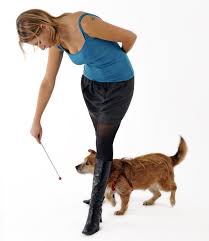
Teaching Your Dog to Target


Targeting is an extremely useful and versatile skill, but many people ask the question, “why?”
This video explains "why" and demonstrates how you can target train your dog.


How Dogs Learn, A Guide To Dog Training


Dog training is something that takes a great deal of patience and dedication, but also requires that you know what to do in order to get your efforts to work. Understanding the various ways that dogs respond and how to implement training can begin with these simple dog training tips that could give you a great hand in your new adventure.

Dog daycare may sound like a great idea for hyperactive, distracted dogs, but it may be a serious setback to your training efforts. While running around and socializing with other dogs will be sure to tire him out, he will not receive the structure needed to curtail any over-the-top behavior.


To teach your dog how to sit on cue, first find a good, soft, smelly treat that your dog will find irresistible, like a piece of cheese or a slice of hotdog. Take the treat in your fist, and hold it over your dog's head, low enough that his nose comes up to reach the treat, but not so high that he tries to jump for it.

Make training into a game that will enrich your dog's life. Try having your dog sit each time he brings you the ball you threw.

Do not attempt to handle dangerous situations alone. If your dog is exhibiting behavior that is threatening to yourself or others, you must remember your responsibility as a pet owner. An evaluation by an animal behavior professional will be invaluable in guiding you through challenging situations. It will also ensure everybody involved is safe.


Target training is teaching your dog to touch an object (the target) with his nose or paw. Once your dog has learned to target the object, you can shape his behavior by placing the object near the next task you want him to learn.

If you want your dog to be on his best behavior, you have to learn and understand the many dog training techniques that really work. These tips are just a start to a wonderful new world of strategies that could be used for optimal results in dog training on your own.

Dog daycare may sound like a great idea for hyperactive, distracted dogs, but it may be a serious setback to your training efforts. To teach your dog how to sit on cue, first find a good, soft, smelly treat that your dog will find irresistible, like a piece of cheese or a slice of hotdog. Make training into a game that will enrich your dog's life. Target training is teaching your dog to touch an object (the target) with his nose or paw. Once your dog has learned to target the object, you can shape his behavior by placing the object near the next task you want him to learn.


Source:http://ezinearticles.com/?How-Dogs-Learn,-A-Guide-To-Dog-Training&id=9458044

Saturday, 1 December 2018

How To Train Your Dog Faster Using Marker Training


Marker training is a kind of positive reinforcement training that utilizes sounds and other sensory cues to mark correct behaviors. It's great for teaching obedience commands and it is incredibly helpful for behavioral modification. Using markers in your training will help your dog learn faster and will streamline the training process.

A marker indicates to the dog when the desired behavior has been offered. Many trainers use clickers as markers (which are great training tools once you get the coordination down), but a simple word (such as "yes") used consistently every time the dog gets it right will do just fine. The benefit of using a marker is that it provides a very clear indication to the dog of which behavior is getting rewarded, which in turn helps the dog to learn behaviors more quickly.


Without the use of the marker, rewards have to be impeccably timed in order to increase the frequency of the behavior. Think about it like this - I want my dog to sit. So I ask the dog to sit, and he sits. I then give a reward. But my reward was not delivered at that exact moment when the dog sat. In fact, my reward was delivered about 5 seconds later because I was a little slow to react and I fumbled the food. So by the time I delivered the reward, the dog had not only sat down, but he also wagged his tail, shifted his weight a little, lifted a paw and turned his head away from me. So which behavior was actually rewarded? It's hard to say exactly, but it was most definitely not the correct one. This is why timing is so crucial in dog training and why markers are extremely useful. I may not be able to deliver a food treat in 0.5 seconds, but I can say a word, make a sound or click a clicker that quickly. By marking the behavior at the exact moment it is offered, we are able to clearly communicate to the dog what behavior is getting the reward, thus removing much of the confusion and human error that can slow training efforts.

You can implement marker training very easily into your training program right away. From now on, every time your dog performs the desired behavior, mark it by saying "yes" or "good dog" and follow with a reward. Over a short period of time, your dog will associate the marker word with the reward and will know that whatever behavior precedes the marker word is the behavior that you want.


Source:http://ezinearticles.com/?How-To-Train-Your-Dog-Faster-Using-Marker-Training&id=9396875

Top 7 Tips for Flying With Your Dog


Whether on a vacation or a business trip, no dog owner leaves without their pet. Although expensive, taking your dog in a plane is a worthwhile experience. The next time you travel, bring your dog along with you. But, before you rush in things, check out these tips for a worry-free airline travel with your dog.

Buy A Carrier

Airline Approved Dog Carrier

Whether a small or a large dog, pet carriers keep your dog contained to wherever it needs to be. Carriers can be hard sided or soft sided. Soft-sided carriers are what you need if you want your pet to be in a cabin. When buying a carrier, make sure that it will fit under the seat of your flight. Also, make sure to check the size restrictions of your chosen airline.

If your dog will be in a cargo hold of the plane, use a hard-sided carrier. It must have ample holes for ventilation.

The carriers must be large enough for your dog to stand, turn around or lie down without discomfort.

Train them in a Carrier First

Animals are less anxious to travel when they know what they are up against. If your dog is not used to being in a carrier, train them to be one. Weeks before traveling, put your dog in his carrier as often as possible. You wouldn't want a dog barking and panicking in a plane when the plane starts moving.

ID your Dog


Similar to traveling on the road, your pet should have proper identification like an ID collar or a pet microchip. Your dog's carrier should also have identification too. Also, carry a current photograph of your dog so it would be easier for local authorities or airline employees to track your pet in case he's lost during the trip.

The ID tag should contain your home address, phone number and the contact number of someone who can reach your destination.

Visit Your Dog's Vet


Make an appointment to your dog's vet for a check up and to ensure that your dog's vaccination is up to date. Also, it would help if you obtain a health certificate that dates at most within 10 days of departure. If you plan to travel abroad, additional health care requirements would be needed. Check document requirements of the country you are visiting for more information.

Fly Direct

Book a non-stop direct flight whenever you can. Direct flights bring less stress to your dog compared to connecting flights. Also, it is best that you fly on weekdays, not weekends or holidays. This will lessen the chance of your dog to be on a cargo hold.

Before buying your ticket, make sure that there is a seat available for your dog in flight. When there's one be sure to reserve both seats on the same ticket.

Arrive early

Arrive at the airport early, but not too early that your dog might get stressed. Airlines only allow for up to 2 hours before the flight. Self-service check-in is not allowed, so you'll have to check-in your dog at the counter.

When You've Reached Your Destination


Don't check-in at your hotel as soon as you reached your destination; instead, take your dog for a long walk first. Your pet will be more comfortable as soon as he is able to grasp his entire surroundings and understands that the same rules apply to the new place too. This will also keep things in check and by the time you arrive at your hotel, your dog will feel right at home.


Source:http://ezinearticles.com/?Top-7-Tips-for-Flying-With-Your-Dog&id=9396932