Showing posts with label sit. Show all posts

Friday, 8 February 2019

A Step-By-Step Guide On How To Train Your Puppy


There are 5 crucial lessons your puppy needs to learn before it becomes an adult dog. This way the lessons learnt, as a pup will remain embedded in his memory for life. This article is a step-by-step guide of 'how to train your puppy'.

1) Learning his name.

For your puppy to respond to your call, you need to teach your puppy his name. The shorter the name, the easier it is to learn. Encourage this training by doing something nice with your puppy before starting. Teaching your puppy his name should be done in two simple steps as given below:

1) Say your puppy's name slowly and clearly to catch his attention. 
2) When your puppy responds to his name, reward him and pat his head. If your he doesn't come straight away, don't tell him off or he will be even slower next time.

2) Knowing the "No".

The next word your puppy needs to learn is "No". From the very beginning he should understand that "No" means something is forbidden.

Be sure your commands are consistent, what is "No' to one day should not be allowed the next, either by you or anyone else in the family.

You need to have command over this word; so that no matter where and when you use it, your puppy will know what he is doing is something he shouldn't.

3) House training your puppy.


Once your puppy has learnt two basic lessons, it's time to move on to house training. There are three simple steps to successfully train your puppy.


1) Take him out every two hours during the day, ideally on waking up, after every meal and after playtime. 
2) If you notice your puppy going round in circles, pick him up and take him outside. When he has finished his business, praise your puppy. 
3) Don't tell your puppy off if he has an accident indoors! Scolding will only stress your puppy out.

4) Sit, Lie down, Stay.

The next few commands your puppy needs to learn should be taught in the order specified.


1) "Sit": While giving this command, push your puppy on his haunches with one hand. Keep his head up with the other hand. 

2) "Lie Down": Ask your puppy to sit, and then gently pull his paws forward while saying "lie down". 


3) Stay: Make your puppy sit and add "stay" while moving away from him. If your he gets up and follows, say "No".

Teaching your puppy meal manners.

Mealtimes should be fixed and your puppy's food bowl must be in the same place, far away from his sleeping area. Tidbits or table scraps should not be given, as it will upset the nutritional balance of the food that you're feeding your puppy currently.


Remember to give your puppy lots of love and praise every time he obeys. This will encourage good behavior.


Source:http://ezinearticles.com/?A-Step-By-Step-Guide-On-How-To-Train-Your-Puppy&id=9164926

Sunday, 2 December 2018

How Dogs Learn, A Guide To Dog Training


Dog training is something that takes a great deal of patience and dedication, but also requires that you know what to do in order to get your efforts to work. Understanding the various ways that dogs respond and how to implement training can begin with these simple dog training tips that could give you a great hand in your new adventure.

Dog daycare may sound like a great idea for hyperactive, distracted dogs, but it may be a serious setback to your training efforts. While running around and socializing with other dogs will be sure to tire him out, he will not receive the structure needed to curtail any over-the-top behavior.


To teach your dog how to sit on cue, first find a good, soft, smelly treat that your dog will find irresistible, like a piece of cheese or a slice of hotdog. Take the treat in your fist, and hold it over your dog's head, low enough that his nose comes up to reach the treat, but not so high that he tries to jump for it.

Make training into a game that will enrich your dog's life. Try having your dog sit each time he brings you the ball you threw.

Do not attempt to handle dangerous situations alone. If your dog is exhibiting behavior that is threatening to yourself or others, you must remember your responsibility as a pet owner. An evaluation by an animal behavior professional will be invaluable in guiding you through challenging situations. It will also ensure everybody involved is safe.


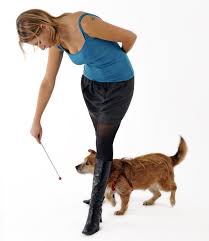
Target training is teaching your dog to touch an object (the target) with his nose or paw. Once your dog has learned to target the object, you can shape his behavior by placing the object near the next task you want him to learn.

If you want your dog to be on his best behavior, you have to learn and understand the many dog training techniques that really work. These tips are just a start to a wonderful new world of strategies that could be used for optimal results in dog training on your own.

Dog daycare may sound like a great idea for hyperactive, distracted dogs, but it may be a serious setback to your training efforts. To teach your dog how to sit on cue, first find a good, soft, smelly treat that your dog will find irresistible, like a piece of cheese or a slice of hotdog. Make training into a game that will enrich your dog's life. Target training is teaching your dog to touch an object (the target) with his nose or paw. Once your dog has learned to target the object, you can shape his behavior by placing the object near the next task you want him to learn.


Source:http://ezinearticles.com/?How-Dogs-Learn,-A-Guide-To-Dog-Training&id=9458044

Friday, 16 November 2018

Five Short Ways To Stop Your Dog From Jumping On Guests


Dogs are full of energy and they take no second chance to shower their love on anybody whether it's you or even your guest. Many pet parents come with the problem that their dog just jumps on anybody those who visit them. Though ignored by many pet owners, it is crucial to provide the basic behavioral training to your dog in order to avoid any of the embarrassing moments that you or your guest may face when these furry pals just put their heels high.

What steps you can to take to stop your hyper dog from jumping on others?

Be a Pack Leader for Your Dog


Usually, dogs look for a captain and when they don't have clarity about their leader, they try to fill this position with whoever visits the house. Therefore, taking up the charge as a leader you would most probably help in bringing cool and assertive energy making your pet behave aptly.

Correct Dog Jumping Behavior


A leader will never tolerate any deviation in the activity or behavior, which you need to remember and follow. Just make your dog realize that what he is doing is wrong in a calming assertive manner. This will allow your dog to figure out what rules he needs to follow.

When Guests Arrive Ask Your Dog to sit Patiently


A dog is a true follower of his front-runner. So, he will follow every command of yours when he sees and respects you as his chieftain. Also, remember that animal leader doesn't compromise for anything for what she or he wants.

Be a Leader for All the Time

It is not for a few days or few weeks to lead your dog. You can't be a director for just some time. Leadership needs to be consistent and it's forever. Consistency encourages your dog to stick to rules and behave in the utmost manner whereas inconsistency tends to create confusion, anxiety and leads to hyper dog behavior. Animal leaders never step down or waffle from their leadership role, and the same applies to you as leading a pack.

Reward with a Treat


Rewarding your furry pal with a treat whenever he behaves properly induces positivity and inculcates good behavior in him. Therefore, whenever he listens to your command encourage this behavior by giving him a treat.

Conclusion:

Dogs are quick learners and it's always easier to train your dog to do something rather than teaching not to do something. Usually, jumping has been reinforced intentionally. Similarly, teaching your pooch to sit showering praise and a treat, and directing him to sit through touch when jumping is an effective tool. With little patience and perseverance, you can make him a well-mannered dog that he doesn't jump on guests.


Source:http://ezinearticles.com/?Five-Short-Ways-To-Stop-Your-Dog-From-Jumping-On-Guests&id=9604926

Tuesday, 17 July 2018

Is It Possible To Train Any Dog?

When we are speaking of dog training it must be recognized that different breeds have different genetic traits that cannot be trained out of a dog. For example a German Shepherd might be more aggressive than a chocolate Lab and that will never change.

As far as manners go, the task is a whole lot easier. It is basic that domestic dogs are very susceptible to love and togetherness, as dogs are pack animals. It is very important for the owner/trainer to be recognized as the leader of the pack, and one of the best ways to accomplish that is to have the dog recognize who is responsible for feeding him.

Dogs also want to please, and they like to have a "job" that they can do in order to receive approval. If you are willing to spend the time with a dog and you can learn the proper training techniques, you will be able to train your dog to do "something" that is productive.

Even if your dogs just learns to sit when you tell him, or come when you call him, that is better than nothing. Dogs are fiercely loyal and they will endure training that is just so-so in order to please their master.


If you don't have the time or the ability to train your dog, it is recommended that you and your dog attend a training school. Notice that it is stressed that the training is for you and your dog. Yes, you really both should be trained for this partnership to really work well.

An obedience school, as it is sometimes called, will have both of you trained very well in a short period of time so that you both know what to do. The dog just needs to understand what you want, and that is most of the problem with us humans, it is difficult to speak dog.

Training will involve a series of basic commands that will give you a well-behaved dog and at the same time will establish you as the pack leader.

Some dogs are more trainable than others, but if you can get your dog to sit, stay, come, stop, lay down and heel, that is really enough for most dogs. Sometimes it's a matter of safety for the dog and sometimes it is convenience for the owner, but once a level of mutual respect is achieved between the owner and the dog, you are going to have a much easier time of it.


Source:http://ezinearticles.com/?Is-It-Possible-To-Train-Any-Dog?&id=9025105

Saturday, 31 March 2018

Good Dog Park Etiquette


Dog parks have become very popular. They offer your pet the opportunity to bond and socialize with other dogs, which is an important step in his training process. But they also open up a whole new set of rules of etiquette that were never addressed by Emily Post.

Degree of Training

Before going to the dog park, your dog should already be trained in the basics, i.e., come, sit, stay. The dog park is an unleashed environment. That means less control by pet owners if their dog gets into a fight with another dog or is irritating the other park visitors.

Your dog should know how to properly respond to your correction and direction. That way if there is a problem, you can count on his responding to your "come," "sit" or "no" command before the problem escalates into a full-fledged fight.

Doggy Body Language and Communication

Dogs have a special way of communicating with each other. In the dog park they need to be allowed to use their communication skills in getting acquainted and establishing parameters with the other dogs. Over-interference by you prevents that natural interaction that is so necessary.

So, unless you see a problem developing, allow the dogs time for sniffing and exploring each other. Sometimes there may even be a growl. If so, let the dogs communicate their wishes with no interference by you.

A growl indicates a warning to the other dog: "Don't go there. This is off limits." Chances are the other dog will get the message and know the ground rules. This is important in establishing their relationship. Only interfere if one or the other is becoming overly aggressive.

Aggressive Behavior

If your dog tends to be overly aggressive with other dogs, the dog park is NOT the place to try to break that habit. You may feel it's simply a matter of more socialization, but it's not fair to the other dogs or owners to expect them to play guinea pig to your aggressive dog. You need to be realistic in assessing your dog's character and, if aggression is a problem, he needs a trainer specializing in that problem.

Health Issues

Your dog should not be at the dog park if he is not up to date in his vaccinations. In addition, if you are aware of other undesirable conditions that are communicable to the other dogs, keep him at home until these are resolved. This includes fleas or scabies (mange) or anything else that can be spread. In addition, your dog should be spayed or neutered before going to the dog park.

One other thing worth mentioning is that dog owners need to understand the various breeds. This will prevent a lot of clashes between owners. What you may think is aggressive behavior may be no more than a natural instinct. For instance, a herding dog herds. He is not being aggressive; he is simply doing what he is born to do: herd. If it is interfering with your dog's enjoyment of the park, have a friendly talk with the owner. Don't assume it's an aggression issue.


The dog park can be a lot of fun for pets and owners alike. But this is true only when proper etiquette is observed. If you are dog-friendly and understand the dog park rules of etiquette, you will have a far more enjoyable experience.


Source:http://ezinearticles.com/?Good-Dog-Park-Etiquette&id=8606238